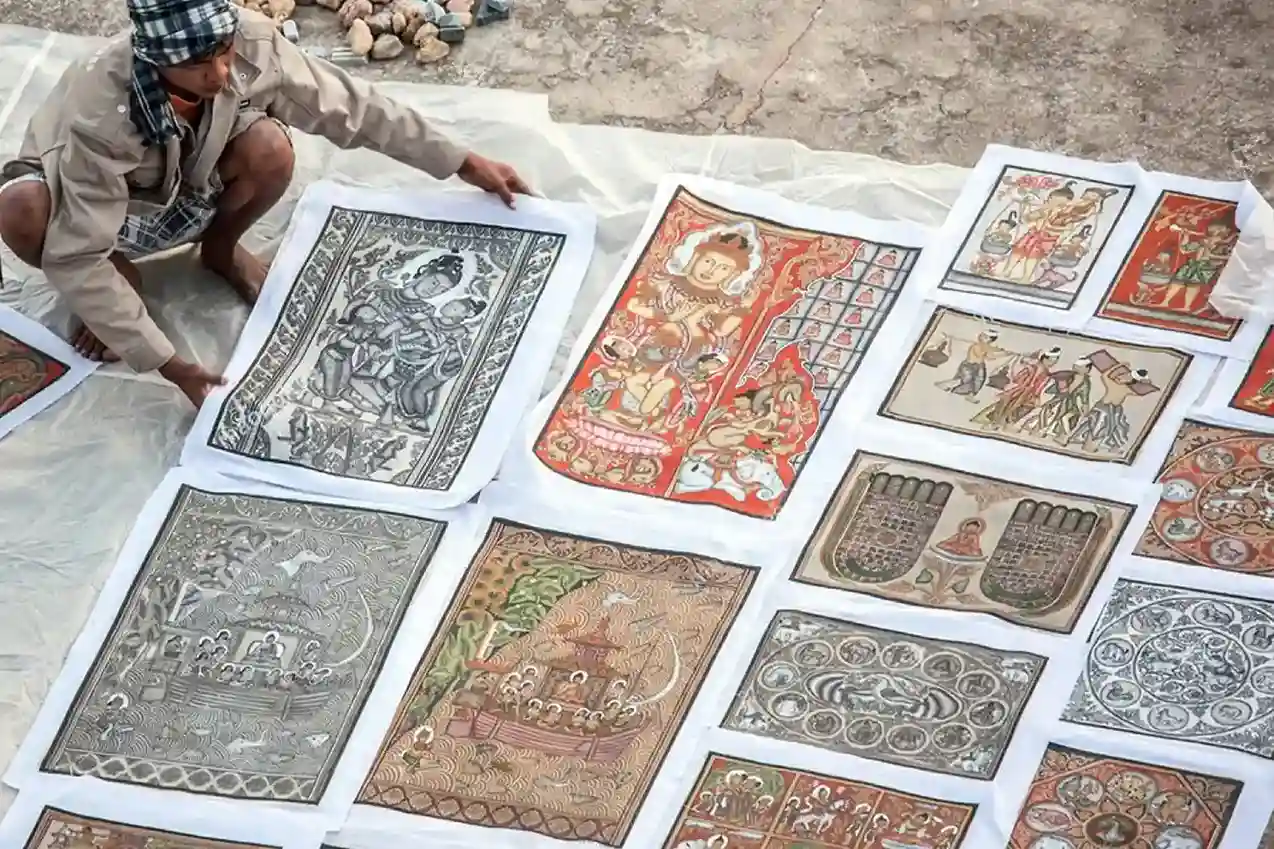
Stories Set in Sand: The Art of Burmese Sand Paintings from Bagan
A craft shaped by earth, patience and skilled hands
by
Team Burma Burma
Some art forms begin not with paint or canvas, but with the land itself. They take their colour and texture from what lies beneath our feet. Burmese sand painting is one such practice. Found in Bagan, it is a meditative art form shaped by patience, with each piece made slowly and deliberately.
Bagan: Where Craft and Culture Meet
Bagan is widely known as the cultural and spiritual heart of Burma. Beyond its temples and monasteries, everyday craft traditions continue to thrive, often away from view. Sand painting lives within this world. It is created and preserved here, passed between generations, rooted firmly in Bagan’s soil and way of life. The practice remains local, steady and deeply tied to its surroundings. This art form exists only in Bagan as it depends entirely on local river sand and natural materials.
What Are Burmese Sand Paintings
In simple terms, Burmese sand paintings are artworks made by layering river sand onto cotton cloth. They are entirely handmade and built through careful repetition. The finished surface feels textured and solid, with a quiet depth that comes from its natural materials. These are not delicate pieces. They are tactile, durable and made to last.
Materials Drawn from Nature
Every element of a sand painting begins in nature, with soft river sand forming the foundation of the work. A natural glue, made from tree sap and often derived from neem, helps bind the sand to the surface. Cloth serves as the base, holding the layers together.
Colour comes from pigments extracted from local stones, giving the paintings their earthy, grounded tones. Nothing feels imported or artificial. Each material belongs to the place it comes from.
How a Sand Painting Comes Together
The process unfolds slowly and calmly. River sand is collected and cleaned before being used. Natural sap-based glue is applied to the cloth, and sand is poured over the surface, pressed gently and left to dry.
This is repeated several times. Multiple layers, sometimes up to five, are built to create strength and stability. With each layer, the surface becomes firmer and more durable.
Once the base is complete, the design is drawn by hand. Natural pigments are then applied, bringing the artwork to life. The entire process moves at an unhurried pace, guided by patience and precision.
Time, Texture, and Meaning
Sand painting is shaped by repetition and waiting. Drying time between layers is essential, and nothing is rushed. This careful approach gives the artwork its lasting strength. Themes often reflect everyday life, landscapes and spiritual Buddhist imagery, interpreted quietly rather than boldly. The sand itself adds softness and depth, encouraging viewers to look closer.
FAQs
1. How long does a sand painting last?
Burmese hand paintings are generally durable. If taken care of properly, they can last for decades. As they are mostly crafted on a piece of cloth or canvas, they are light and flexible. Over time, the fabric can sag but this can be easily prevented by framing them properly.
2. What materials are used for a sand painting?
Artists use cleaned river sand, naturally extracted colours and a sap-based glue to create these paintings on a cloth or a canvas.
3. Are sand paintings a good souvenir from Burma?
Yes, Burmese sand paintings are a unique souvenir and art form. Originating in Bagan and are celebrated across Burma, these sand paintings are a labour of love. Carefully crafted layer by layer with love and precision, they tell stories of Burmese lifestyles, people and culture.