Thanaka: Burma’s 2000-Year-Old Beauty Ritual
The bark paste that’s become a cultural emblem of Burma
by
Team Burma Burma
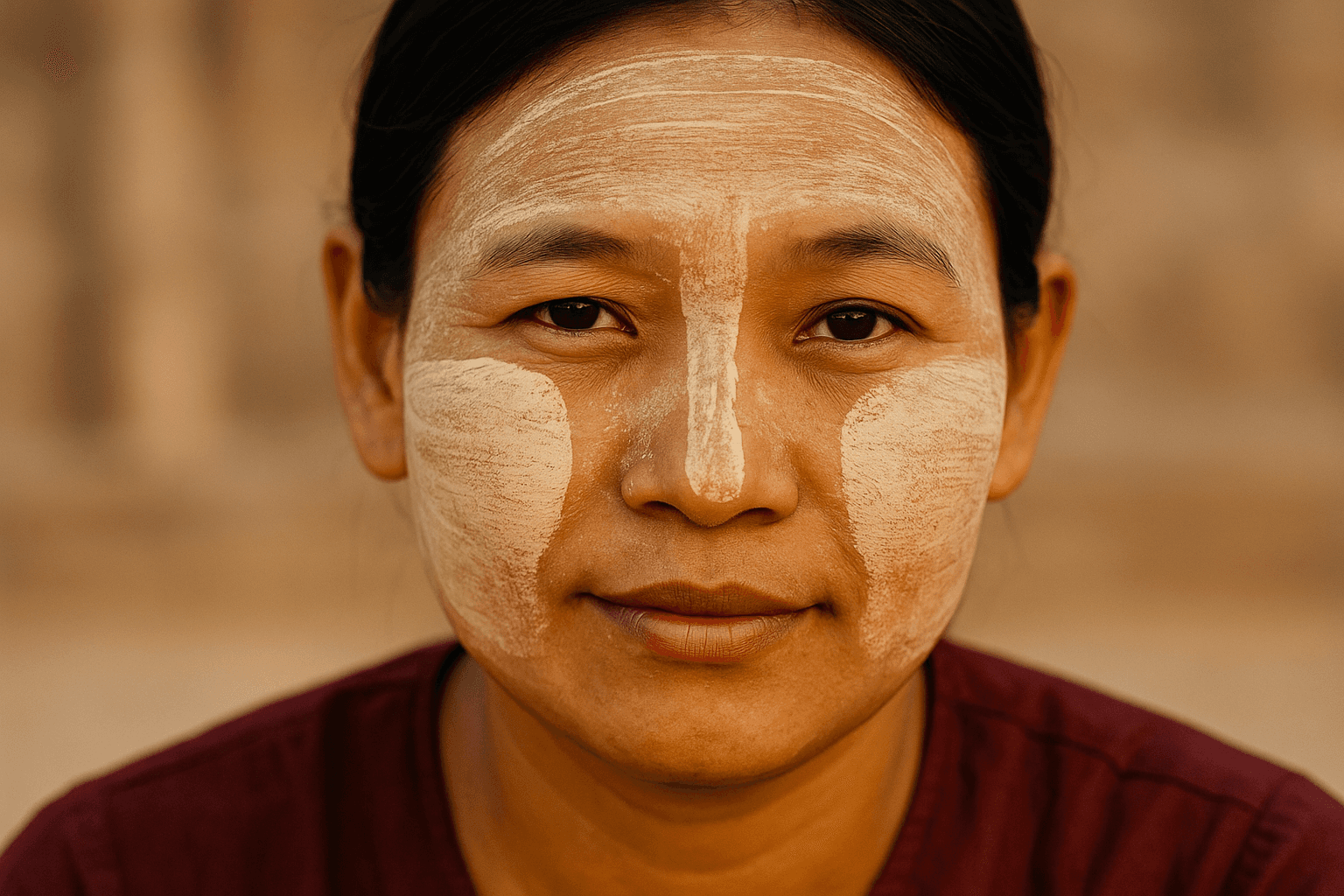
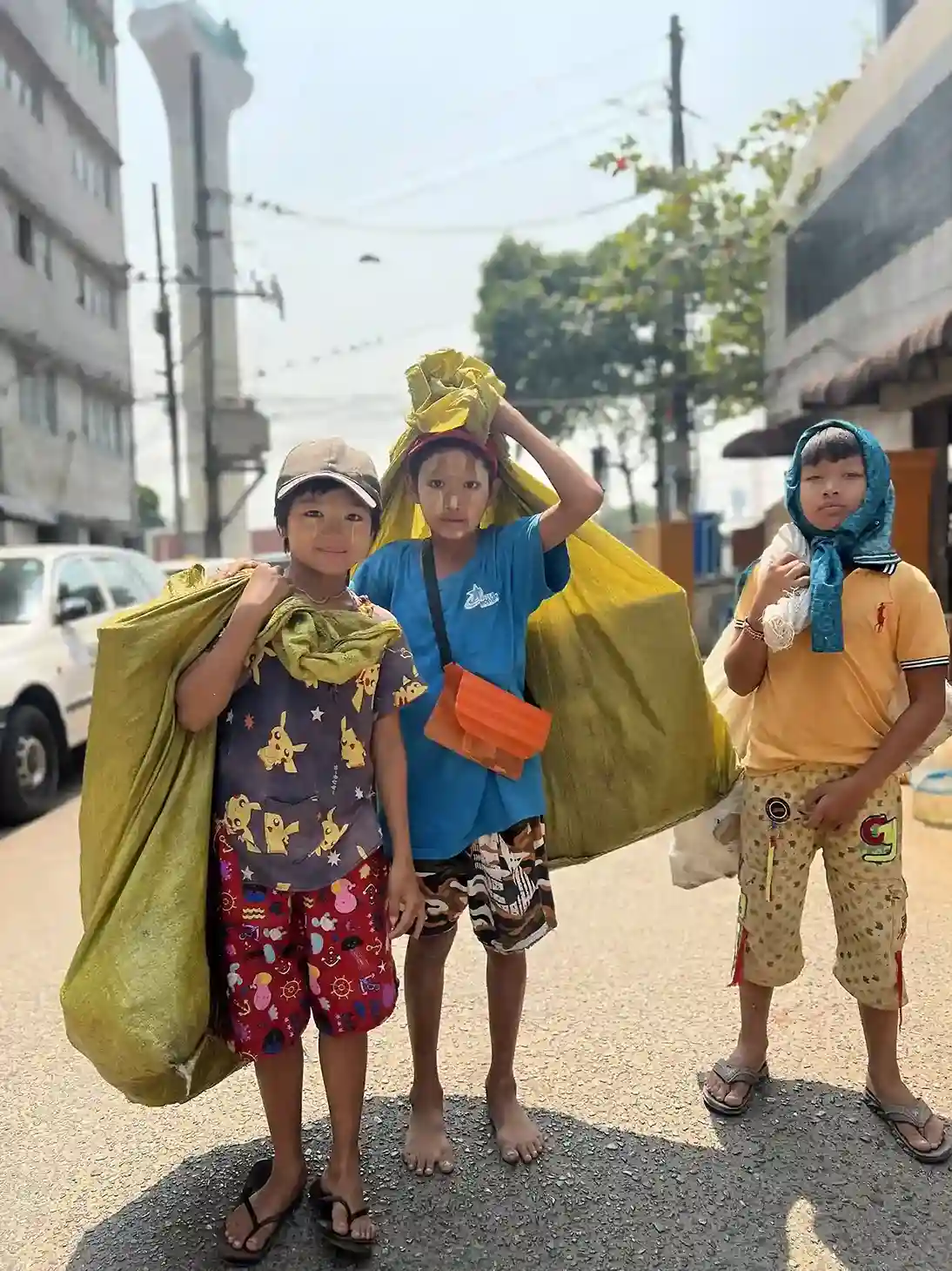
In the streets of Burma, whether you are walking around Yangon or Mandalay, you’ll notice something instantly striking. From school children to street vendors, everyone wears a pale, yellowish paste on their faces. Swirled across cheeks, dusted over noses, or brushed in the shape of leaves — it’s called Thanaka.
What is Thanaka?
For the Burmese, Thanaka is a 2,000-year-old ritual that connects the country’s people to their history, climate, and sense of identity. It’s beauty, protection, culture and memory, all in one small smear of bark.
From royal rituals to everyday life
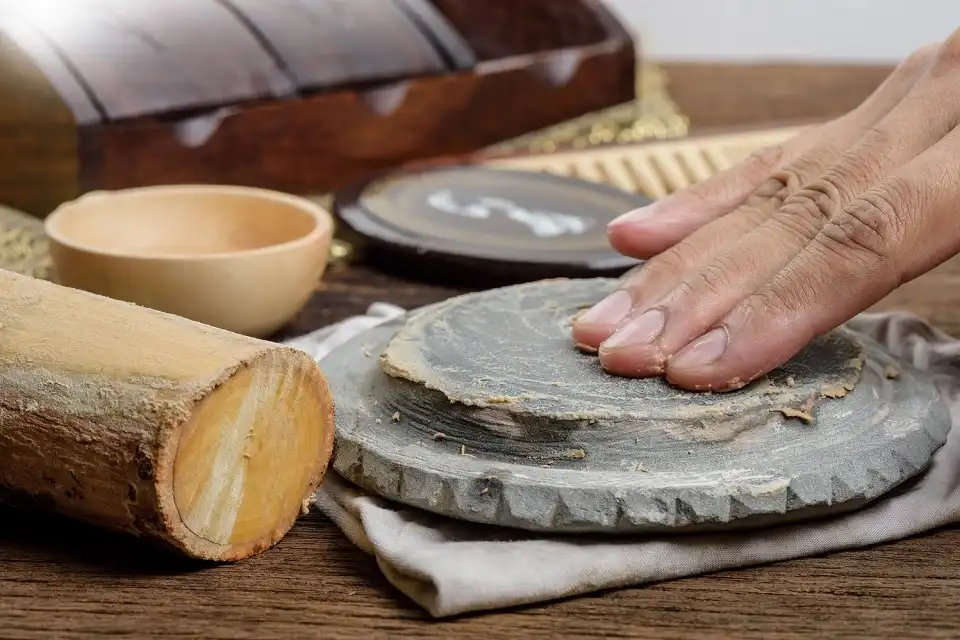
Thanaka is made from the bark of the Thanaka tree, a slow-growing species that thrives in central Burma. For generations, families have ground the bark of the Thanaka tree with water on a circular stone slab called a kyauk pyin until it forms a creamy, golden Thanaka paste. The process is slow and deliberate, as if every swirl connects the present moment to centuries of tradition.
Its history reaches back over a millennium. Archaeologists have found traces of Burmese Thanaka in ancient temples in Bagan. And, praises of its scent and glow have been mentioned in Burmese poetry since the 14th century.
First, it began as a royal indulgence, used by queens and courtiers to keep their skin cool and radiant; eventually, it became an integral part of everyday life. Farmers wore it to shield themselves from the harsh sun. Children dabbed it before playing outside, and women adorned themselves with decorative swirls for festivals and family gatherings.
The process of making the Thanaka paste is long and tedious. Today, it remains as common as ever, seen on faces in markets, monasteries, and city cafés and is also sold in the form of a convenient Thanaka powder. It’s a unifying sight, one that cuts across class and gender.
More than just skincare
Thanaka is, first and foremost, practical. The benefits of Thanaka are endless. The paste acts as a natural sunscreen and cooling agent in Burma’s hot climate. It has anti-oxidant and anti-bacterial properties, keeping the skin protected and fresh. But the reason Thanaka has lasted for centuries is that it’s rooted in Burma’s spiritual practices and beliefs.
In Burmese culture, gold is the colour of enlightenment. Thanaka, with its warm, golden hue, is seen as a reflection of purity and inner calm. Applying it is both an act of self-care and a ritual of mindfulness.
Every pattern has a purpose
Look closely, and you’ll see that Thanaka isn’t worn in just one way. Its designs often carry meaning. Young children may have two round patches on their cheeks: a mark of childhood, innocence and protection. Teenagers and young women might shape the paste into leaf patterns or floral motifs, especially during celebrations. Sometimes, a stripe runs across the nose and cheeks, blending practicality with style.
During religious festivals, Thanaka is often applied in more elaborate patterns, including circles, petals, or leaf shapes. This is to symbolise purity, joy, and compassion. On ordinary days, children and adults wear simpler dots or strokes, but the intention remains the same: to cool and protect the body and calm the mind.
What’s remarkable is how this ritual adapts without losing its essence. Whether it’s a quick streak applied before school or a carefully designed flourish for a wedding, Thanaka turns the face into a small canvas of culture.
Symbolism in faith and festivals
During Thingyan, the Burmese New Year water festival, Thanaka takes on special significance. The festival marks renewal, joy, and community—a time to wash away the old year and welcome the new.
At Burma Burma India, we join the celebration each year, wearing Thanaka ourselves as a way of honouring this centuries-old tradition. The golden streaks on our faces remind us of where our story comes from, and the warmth and generosity that define Burmese culture.
Thanaka’s modern revival
Despite the flood of global beauty products, Thanaka has never really disappeared. In fact, it’s making a mark outside of Burma, too.
Younger Burmese are reclaiming Thanaka as a symbol of cultural pride. In cities like Yangon and Mandalay, you’ll find urban youth wearing it alongside jeans and sneakers. Influencers and wellness enthusiasts are also rediscovering it for its natural, eco-friendly qualities.
Scientific studies have proven that Thanaka contains powerful antioxidants and natural sun-blocking agents. This makes it one of the world’s oldest and most sustainable forms of natural skincare. And globally, beauty brands are taking note.
So, the next time you see that faint golden glow on someone’s cheek, know that it carries centuries of care and culture. It’s a little piece of Burma’s story that brightens the skin.
FAQ’s On Thanaka Ritual
1. What is the meaning of Thanaka?
Thanaka is a 2,000-year-old Burmese ritual. It comes from the bark of the Thanaka tree. Made into a creamy, golden Thanaka paste, the bark of the Thanaka tree is ground with water on a circular stone slab called a kyauk pyin. The paste acts as a natural sunscreen and cooling agent in Burma’s hot climate and comes with anti-bacterial and anti-oxidant properties.
2. What is Thanaka powder?
Traditionally, Thanaka is made into a paste by grinding the bark of the Thanaka tree with water on a traditional stone slab. However, the process is tedious and time-consuming. Today, for convenience, it's also sold in the form of a Thanka Powder, which can be mixed with water and applied instantly.
3. Are Thanaka and Sandalwood the same?
No, Thanaka and Sandalwood are not the same. Thanaka is sourced from the Thanaka - Limonia acidissima tree, widely known as the wood-apple tree.
It’s often confused with the Sandalwood - Santalum album tree, as both are made into aromatic pastes and used for cosmetic and medicinal benefits. While sandalwood is known for its cooling properties, the benefits of Thanaka include sun protection, cooling properties and comes loaded with anti-oxidants. Over the years, Thanka has become an integral part of the Burmese culture.
4. Is Thanaka safe for daily use?
Yes, Thanaka is very safe for daily use. In fact, it can be used multiple times a day. In Burma, be it children, adults or the elderly, everyone wears Thanaka. In the day, it's mainly used for sun protection. It is also applied before sleeping for its anti-bacterial and anti-inflammatory healing properties.
5. How can I make Thanaka at home?
If you wish to go the traditional way, you can purchase the bark, grind it into a paste and apply on your skin. You also have convenient options available in the market, like the Thanka powder, which can be mixed with water and used as per your convenience