The Forgotten History Of Khao Sa
Exploring the Burmese origins, Gujarati trading connections and culinary traditions that shaped Surti Khawsa
by
Team Burma Burma
Khao Sa is a coconut milk noodle dish with roots in Burma, where it is closely related to the much-loved Oh No Khowsuey. Its journey to India is connected to the movement of Gujarati traders who travelled to Burma for business and trade, particularly during the colonial period. As families returned to Gujarat, they brought back a taste of the food they had grown fond of. Over generations, the Burmese noodle dish found a place in Memon kitchens, especially around Surat and Rander, where it evolved into what is now known as Surti Khawsa.
Where does Khao Sa come from?
To understand Khao Sa, we must first look at Burma and a traditional noodle preparation called Oh No Khowsuey. In Burmese, Ohn No refers to coconut milk, while Khaosuey refers to noodles. As its name suggests, Oh No Khowsuey is a comforting noodle dish made with a rich coconut milk curry. Traditionally, it is prepared with wheat noodles served in a coconut milk-based broth, thickened with chickpea flour and finished with an assortment of toppings.
These toppings are an important part of the experience. Crispy fried noodles, sliced onions, chilli, lime and fritters bring different textures and flavours to each bowl. Rather than being mixed into one uniform preparation, they allow diners to customise every serving.
The dish is a familiar part of everyday Burmese food culture, enjoyed at home and found at local eateries and street stalls. It is also an example of how Burmese cooking brings together ingredients and influences from different parts of the region.
The relationship between Oh No Khowsuey and Khawsa is best understood as one of culinary ancestry rather than an identical recipe. The coconut milk and noodle combination provides the common foundation, while the ingredients, accompaniments and manner of serving have changed along the way.
How did Khao Sa travel from Burma to India?
The story of Khao Sa’s arrival in India is closely linked to the trading connections between Gujarat and Burma. But why were Gujarati traders in Burma? Trade across the Indian Ocean had connected the western coast of India with Southeast Asia for centuries. Surat, once among India’s most important port cities, was an established centre of maritime commerce. Gujarati merchants had extensive trading networks that reached far beyond the subcontinent.
These connections expanded considerably during British rule, attracting merchants, workers and families from different parts of India. Gujarati business families were among those who travelled to Burma, establishing commercial relationships and building lives there.
How did a Burmese noodle dish become part of Indian kitchens?
Trade brought people to Burma, but everyday life introduced them to its food. Families living and working there encountered Burmese cooking through local markets, eateries, neighbourhoods and the people they interacted with. Among the dishes they grew fond of was the coconut milk noodle preparation that would eventually become Khao Sa in their own kitchens.
When some of these families returned to India, they carried more than business experiences and memories. They brought home recipes, ingredients, cooking methods and food preferences they had acquired in Burma. Khao Sa gradually became part of the food traditions they maintained back home. What began as a familiar Burmese preparation was recreated with locally available ingredients and adapted to the tastes of the households making it.
This is an important part of the history of Khao Sa; the dish was not simply introduced to India and preserved unchanged. It was carried across borders, cooked in new kitchens and made part of a different culinary tradition.
How did Khao Sa become Surti Khawsa?
Surat and Rander played an important role in bringing Khowsuey onto the Indian food map. Rander, situated on the banks of the Tapi River, has a long history of commerce and overseas connections. Surat, meanwhile, was a major commercial centre in western India, with merchants operating across domestic and international trade routes. These connections help explain how people, ingredients, and food traditions moved between Burma and this part of Gujarat. They also provide an important backdrop to the local evolution of Khao Sa.
Over time, the Burmese preparation took on a character of its own in Gujarat. It became known as Surti Khawsa, a dish associated with family kitchens and local street-food culture. The change was not just in its name but also in the way it was prepared and served. Freshly squeezed coconut milk became central to the preparation. Crispy noodles formed the base, while chilli and garlic brought heat and depth. Fresh coriander added brightness, and crushed crispy toppings completed the bowl. The accompaniments were often served separately, allowing everyone to put together their bowl just the way they liked it.
In some versions, crispy papdi replaces the noodles altogether, creating another variation in texture while retaining the familiar coconut milk base.
This is what makes Surati Khawsa history particularly interesting: a dish that began in one culinary setting developed a distinct regional identity without losing the flavours that connected it to its origins.
What makes Surti Khawsa different from Burmese Oh No Khowsuey?
Although Surti Khawsa and Burmese Oh No Khowsuey share a common foundation, they have evolved into two distinct preparations. Oh No Khowsuey is traditionally made with wheat noodles served in a rich, cooked coconut milk curry, often prepared with chicken and chickpea flour. It is accompanied by toppings such as fried noodles, fritters, sliced onions, chilli and lime. Surti Khawsa, on the other hand, takes a different approach. Freshly squeezed coconut milk is poured over crispy noodles, with chilli-garlic chutney, fresh coriander and crushed crispy toppings adding flavour and texture. In some regional variations, crispy papdi replaces the noodles altogether.
The difference lies not just in the ingredients but also in the preparation and way the dish is served. While Oh No Khowsuey is enjoyed as a comforting coconut curry noodle soup, Surti Khawsa has developed its own identity, retaining the familiar coconut milk base while reflecting the flavours and food traditions of Gujarat.
One of the most interesting differences is the way the coconut milk is used. In Oh No Khowsuey, it forms part of a cooked, savoury curry broth. In the Surti Khawsa version described here, fresh coconut milk is poured over the noodles, creating a lighter preparation where the toppings play a more prominent role.
The two dishes share a flavour foundation, but each reflects the food culture in which it evolved.
Why has Khao Sa remained a family favourite?
Perhaps the most interesting part of Khao Sa’s story is how it travelled through generations without necessarily being documented in cookbooks or restaurant menus. For many families, it was a recipe remembered through everyday cooking. It was made at home, passed down through family members and served in a familiar way. Its presence in street-food stalls around Surat also helped it remain part of the region’s food culture. The preparation is particularly interesting because the final bowl is as much about the toppings as it is about the coconut milk and noodles.
Crispy noodles, chilli-garlic oil, fresh coriander and other accompaniments are often placed in separate bowls. Each person can build their own combination, adjusting the textures and intensity of flavours with every serving. This style of eating preserves a little of the communal experience of Burmese noodle dishes while reflecting the preferences of the kitchens that made Khao Sa their own.
It is also a reminder that recipes do not always need written records to survive. Sometimes, the strongest record of a dish is the fact that someone continues to make it for their family.
How is Khao Sa being served at Burma Burma?
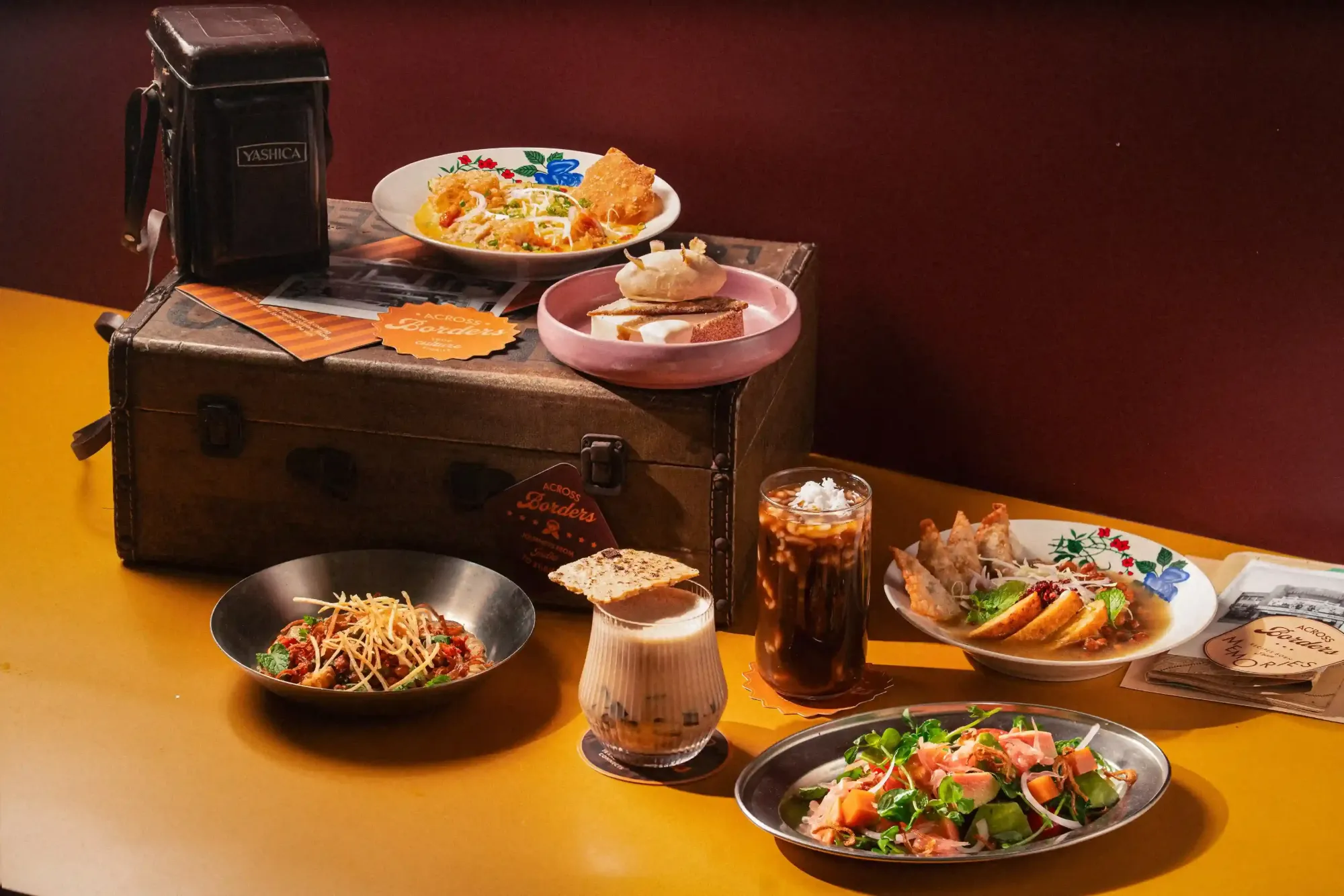
At Burma Burma, Khao Sa is part of our Across Borders menu, a collection inspired by the movement of people, ingredients and culinary traditions between India and Burma. The menu looks at stories of families who travelled between the two places, carrying recipes and memories that became part of their lives back home. Khao Sa is one such story.
Our preparation takes inspiration from the Surti version of this Burmese-origin dish. It brings together fresh coconut milk and noodles, topped with chilli-garlic chutney and crushed wonton crisps. The result is a bowl that brings together two culinary traditions, with each ingredient playing its part. The coconut milk offers a gentle richness, the chilli-garlic chutney adds a little heat and the crushed wonton crisps bring a satisfying crunch.
It is our way of bringing a regional Indian interpretation of a Burmese favourite to the table, while acknowledging the story that connects the two.
What does the journey of Khao Sa tell us about food and journeys between two countries?
Khao Sa is a reminder that food has always travelled with people. Long before recipes were shared online or restaurants introduced cuisines to new audiences, traders and families were carrying flavours across countries. They brought back ingredients, cooking techniques and memories of meals that had become part of their lives elsewhere.
Some recipes remained close to their original form. Others changed with the ingredients available, the tastes of a new place and the hands that prepared them. Khao Sa belongs to the latter story. Its connection to Oh No Khowsuey, its place in Memon kitchens and its evolution into Surti Khawsa tell us how a dish can cross borders and find a new identity without losing its past.
At Burma Burma, this is exactly the kind of connection we wanted to explore through Across Borders. Because sometimes, the most interesting food stories are not about where a dish ends up, but about everything it carries along the way.