What Is a Burmese Doll? The Stories Behind Burma’s Traditional Dolls
Exploring Burmese dolls, their origins, craftsmanship and the traditions they carry
by
Team Burma Burma
A Burmese doll can be much more than a little figure dressed in traditional clothes. Depending on where it comes from and why it was made, it can offer a glimpse into Burma’s clothing, craftsmanship, communities, beliefs and everyday life. There is no single “traditional Burmese doll” but different kinds of dolls have emerged from different regions and traditions, each carrying its own story. Some were made for children, some represented people and ways of life and some had deeper cultural or ritual associations. A Burmese doll is not one single type of doll. The term can describe different dolls, figurines and handmade figures made in Burma or created to represent Burmese people, clothing and traditions. Some are made from cloth, while others use papier-mâché, wood or other materials. And that is what makes the story of the Burmese doll rather interesting.
There is no one face, costume or meaning that belongs to every traditional Burmese doll. A doll from Shan State can have a very different story from a papier-mâché figure associated with Burmese court culture, just as a doll made to represent traditional dress may have a different purpose from a theatrical puppet. What they can share, however, is a connection to the people, clothing, craftsmanship and stories of Burma. So, what is a Burmese doll really? Where did these dolls come from, and what can they tell us about the culture they represent?
Let’s take a closer look.
What Is a Burmese Doll?
A Burmese doll is a handmade or manufactured figure associated with the people, clothing, traditions or cultural life of Burma. The term covers several different kinds of dolls and figures rather than one standardised form. Some traditional examples are made from cloth and dressed in regional clothing. Others are crafted from papier-mâché or wood. Some were made as children’s toys, while others represented particular people, occupations, social roles or cultural traditions. There are also figures that sit somewhere between the worlds of dolls, figurines and puppets.
For example, the British Museum has cloth dolls from Shan State dating to the late 19th or early 20th century. One is dressed in patterned black, white, yellow and green cloth, while another has a white outfit with a pink jacket. Museum records suggest that examples of this kind may have had a ritual context, possibly being placed in spirit houses in connection with protecting a child or wishing for conception. There are also Burmese dolls whose purpose is much more straightforward: representing people and traditional ways of life.
Museums Victoria, for instance, holds a Burmese national doll made in Burma around the 1970s–80s. The figure represents a Burmese woman in traditional dress and carries two baskets of fruit. The museum classifies it under cultural identity, clothing and national identity. So when we ask “what is a Burmese doll?”, the answer is really a story of several different traditions.
History and Origin of Burmese Dolls
There is no single documented date or place that can be called the exact origin of Burmese dolls. That is partly because Burmese dolls describe a broad group of objects rather than one historical tradition. Dolls have existed in different forms and contexts, and surviving examples come from different communities and periods. Museum collections give us some useful glimpses into this history.
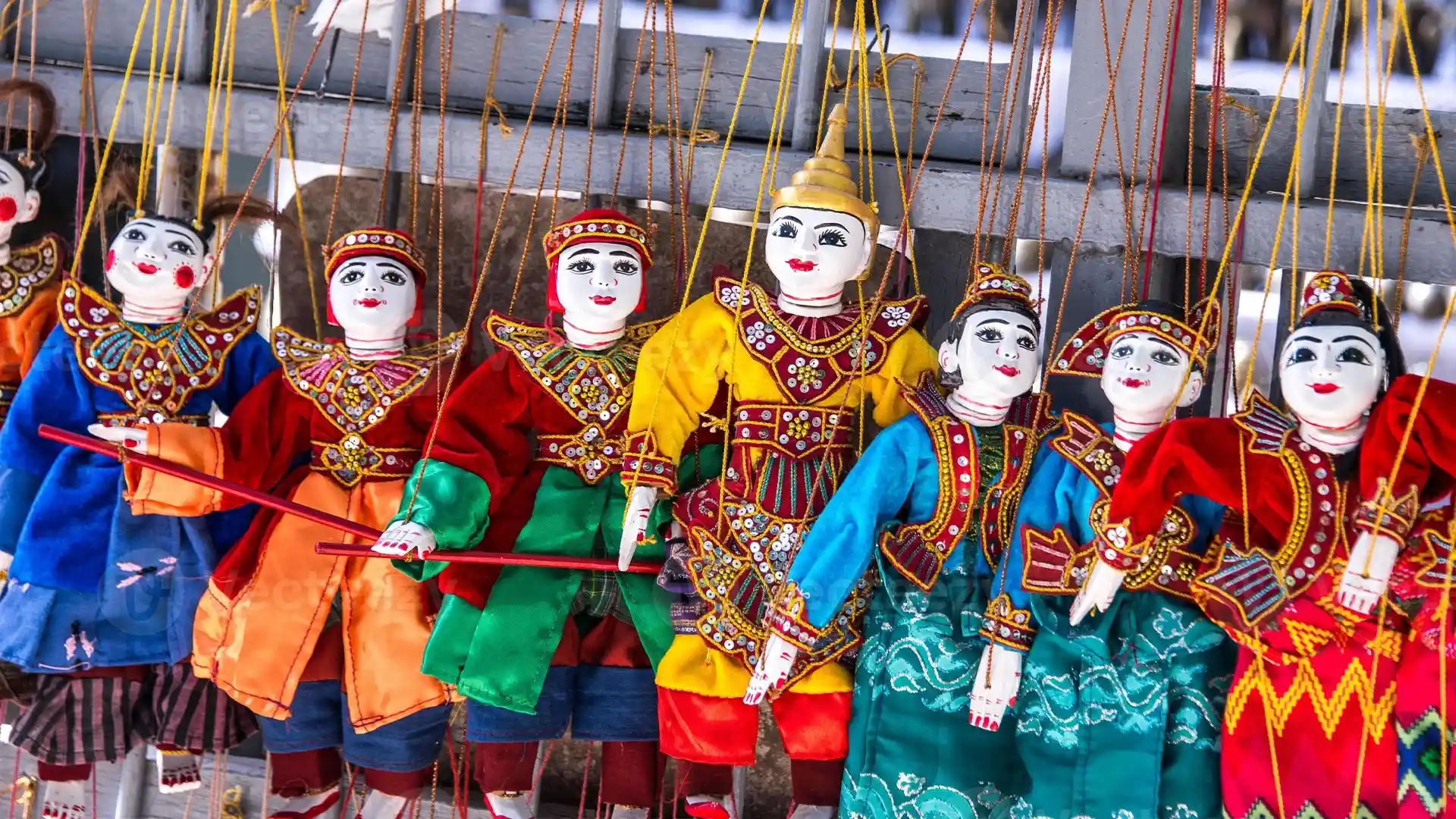
The British Museum, for example, records several dolls from Shan State dating to the late 19th and early 20th centuries. These are simple cloth figures made from cotton, showing that handmade dolls were part of material culture in the region by this period. Other Burmese figures have a very different history. One particularly recognisable type is the papier-mâché figure of the royal page, sometimes known as Pho Wa. Historical accounts describe royal pages as young servants associated with the Burmese royal court. Figures representing them appeared as decorative sculptures and later became familiar as papier-mâché dolls. These figures are especially interesting because their story isn’t simply about childhood toys. Their appearance is connected to an older visual tradition associated with the royal court. The traditional Burmese marionette theatre, known as yokthe, has a long history of its own. Historical sources describe puppetry as an important courtly and theatrical tradition, with puppets representing humans, animals, gods and mythical beings. But it is important not to make the mistake of treating the history of Burmese puppets as the history of all Burmese dolls.
They overlap in their use of crafted human figures, but they developed for different purposes.
Burmese Doll Meaning and Symbolism
The meaning of a Burmese doll depends on what kind of doll it is, where it comes from, who made it and what it was intended for. There is no single symbolic meaning shared by every Burmese doll. For some dolls, the connection may simply be cultural representation. A figure dressed in traditional clothing can preserve details of how people dressed and how regional identities were visually expressed. For others, the meaning can be more specific. The royal-page figures associated with Burmese court culture, for example, preserve the visual memory of people who once served in royal settings. Their hairstyles, jewellery, clothing and postures were not random decorative choices; they were connected to how these figures were understood within the larger courtly world. Some dolls simply capture everyday cultural identity. A doll dressed in traditional clothing can tell us about textiles, hairstyles, accessories and the ways people presented themselves in a particular community or period. So Burmese doll symbolism is varied. It can be religious, ritual, social or about representing a people and their way of life.
Why Are Burmese Dolls Culturally Significant?
Burmese dolls are culturally significant because they can preserve pieces of everyday culture in a form that is remarkably easy to understand. A painting might show someone wearing a particular outfit. A written record might describe what people wore. But a doll lets you see the clothing, accessories, hairstyle and posture together, at a human scale. That makes dolls especially useful as cultural objects. A Burmese doll dressed in traditional clothing can preserve details of dress that might otherwise change or disappear. A handmade figure can also reveal local craft practices: how fabric was cut and sewn, how faces were formed, how hair was represented and how small accessories were made.
What Do Traditional Burmese Dolls Look Like?
There is no single appearance that defines a traditional Burmese doll. Different examples can vary considerably depending on their community, purpose and period.
Clothing
Clothing is often one of the most noticeable features. A doll may be dressed in a longyi, traditional blouse or other regional clothing, depending on the person or community being represented. This is particularly important because clothing in Burma has never been purely decorative. Fabrics, patterns, jewellery and ways of wearing clothes can communicate regional and social identities like different communities, including Shan, Haka and Akha traditions, showing just how varied dress across Burma can be. So a doll wearing a particular outfit isn’t necessarily dressed that way simply because it looks pretty. The clothes can be part of the story.
Hairstyles and facial details
Traditional figures can also feature distinctive hairstyles and painted facial details. Some papier-mâché royal-page figures, for example, are described with hair tied on either side of the head, round patches of thanaka on the cheeks, large bracelets and other details associated with their representation. These details make the figure recognisable while also connecting it to a particular cultural setting.
Materials
The materials used can vary widely. Cloth was used for dolls such as those recorded from Shan State. Papier-mâché became associated with figures such as the royal-page dolls, while wood was also used for sculptural versions of these figures. Wood, clay and fabric also appear across Burmese toy and figure-making traditions. This variety is important. There isn’t one “traditional Burmese doll-making material.” Instead, local materials and available craft techniques shaped what different makers could create.
Are Burmese Dolls and Burmese Puppets the same?
No. Burmese dolls and Burmese puppets are related, but they aren’t the same thing. A doll can be made to represent a person, community or tradition without being designed for theatrical performance. A puppet, on the other hand, is specifically created to be manipulated. Burmese puppetry has its own rich tradition. The yokthe marionette is a string-controlled figure used in performance, with different characters traditionally representing people, animals, gods and mythical beings. The tradition became especially important at royal courts and was used not only for entertainment, but also to communicate stories, literature, history and social ideas.
Some Burmese puppets may look very much like dolls when they’re sitting still. But their purpose gives them away. A doll is a figure. A puppet is a figure made to move.
How Do Burmese Dolls Reflect Burma’s Cultural Heritage?
The Burmese dolls celebrate the culture and heritage of Burma through the tiniest details. A piece of fabric can tell us about the traditional dresses of that particular region. A hairstyle can point towards a particular way of presenting oneself. A necklace or bracelet can add another clue. A painted face can connect a figure to a particular character or tradition. And the material itself can reveal something about local craftsmanship. This makes traditional dolls a fascinating way of looking at culture because they bring several elements together in one object.
Burmese Dolls in the Present Day
Burmese dolls remain relevant because they offer a tangible way of understanding and remembering traditional culture. They can introduce younger generations to traditional clothing and craftsmanship, while also helping preserve visual details of earlier ways of life. Their value isn’t only in their age. A contemporary figure representing traditional Burmese dress can still communicate something meaningful about cultural identity. And traditional craft techniques can continue to be adapted into new forms.
A Small Object With a Bigger Story
Perhaps that’s the nicest way to think about a Burmese doll. Not as one particular type of toy, but as a small object that can carry a surprisingly large amount of information. A cloth doll from Shan State can open a window into local traditions and beliefs. A papier-mâché royal page can bring the world of the Burmese court into focus. A doll dressed in traditional clothing can preserve details of dress, craft and cultural identity. And alongside all of them sits Burma’s famous puppet tradition, reminding us that crafted figures have long had a place in storytelling and performance too. The more closely you look, the more you find. Because sometimes, to understand a culture, you don’t need to start with something grand.
Sometimes, you can start with something small enough to hold in your hands.
Frequently Asked Questions
What is a Burmese doll?
A Burmese doll is a handmade or manufactured figure associated with the people, clothing, traditions or cultural life of Burma. The term covers different types of dolls and figures rather than one standardized form.
Where did Burmese dolls originate?
There is no single documented origin for all Burmese dolls. Museum collections show different types from different communities and periods, including cloth dolls from Shan State dating to the late 19th or early 20th century. Other Burmese figures developed from courtly, folk and theatrical traditions.
What do Burmese dolls represent?
Depending on the type, Burmese dolls may represent traditional clothing, cultural identity, social roles, everyday life, childhood or particular folk traditions. Some documented dolls also had ritual associations, but these meanings do not apply universally to every Burmese doll.
Why are Burmese dolls important in Burmese culture?
Burmese dolls can preserve and communicate details of traditional clothing, craftsmanship, social roles and cultural identity. Museums often treat them as cultural and historical objects as well as toys or decorative figures.
What are traditional Burmese dolls made of?
Traditional examples can be made from materials including cloth, papier-mâché and wood. The material varies according to the type of figure, its purpose, its period and the craft traditions used to make it.
Are Burmese dolls and Burmese puppets the same?
No. Burmese puppets, particularly traditional yokthe marionettes, are designed to be manipulated in performances. Dolls are a broader category and are not necessarily intended for theatrical use. Burmese puppetry has its own distinct history as a performing art.