The Long Journey of Burmese Snacks: Flavours That Appeal To The Indian Taste Buds
Discover how trade and travel evolved the cuisine of Burma, creating snacks that feel surprisingly familiar to the Indian palate, yet so distinctly Burmese
by
Team Burma Burma
Food has a way of travelling. Whether it’s a spice carried across a sea, a technique taught from one kitchen to another or a trader settling in a new land and cooking something that tastes a little like home, these small journeys over time become part of the food culture of an entire place.
Burmese cuisineneighbours through trade routes. India, in particular, has had a significant influence on the country’s food culture. Indian traders and communities brought ingredients, spices and cooking traditions with them, and over generations, many of these found a new home in Burmese kitchens. Lentils, gram flour, spices and familiar techniques became part of a cuisine that was unmistakably Burmese, even if some of its ingredients had travelled from elsewhere. This journey can be found throughout Burma’s cuisine, from home-cooked meals to Burmese street food snacks. One of the best things about Burmese food is how familiar it can feel, even when you’re tasting it for the first time. It’s no surprise, then, that Burmese snacks often find an instant connection with Indian diners. is full of stories like these. Positioned between South and Southeast Asia, Burma has long been connected to its
When Familiar Ingredients Take a Different Route
There is something fascinating about finding an ingredient you know in a completely different setting. Potatoes are potatoes, lentils are lentils and a fried snack is still a fried snack. But change the spices, introduce a Burmese technique, add a little acidity, a different texture or an ingredient from another corner of the country and suddenly, something familiar becomes something new. Sometimes, even the variety of the said ingredient grown in a new region changes how the dish tastes and feels. And when the required ingredients aren’t found and the next best alternative is used as a substitute, a new dish is born that’s sometimes better than. That is part of what makes Burmese snacks for Indians such an interesting starting point for discovering the cuisine. The familiarity isn’t accidental. It is a reminder of how closely food cultures have always been connected.
Take lentils, for example. They are deeply familiar to Indian kitchens, but in Burma they appear in forms that can feel entirely different, from golden fritters to creamy dips and other tea-shop bites. Potatoes, too, take on a distinctly Burmese personality when tossed with roasted chillies, peanuts, lemon leaf and brown onion like the Wa tribe does.
Then there are the flavours that bridge the two cuisines naturally: chilli, tamarind, coriander, onion, spice and that wonderful balance of heat and acidity. Burmese food doesn’t simply replicate what travelled into the country. It made it its own.
From Trade Routes to Tea Shops & Street Food Snacks
This is where the story gets even more interesting. Food influences don’t remain in cookbooks or royal kitchens. They eventually make their way into everyday life; into market stalls, neighbourhood kitchens and the small tea shops that are such an important part of Burmese food culture. A Burmese tea shop isn’t just somewhere to have tea. It is where people stop for a bite, meet friends, catch up over conversation and eat their way through a menu of small, satisfying things. And snacks are made for this kind of eating.
This is perhaps the most interesting way to understand how food travels: not through a map, but through what’s put on a plate.
The Burmese Way of Snacking
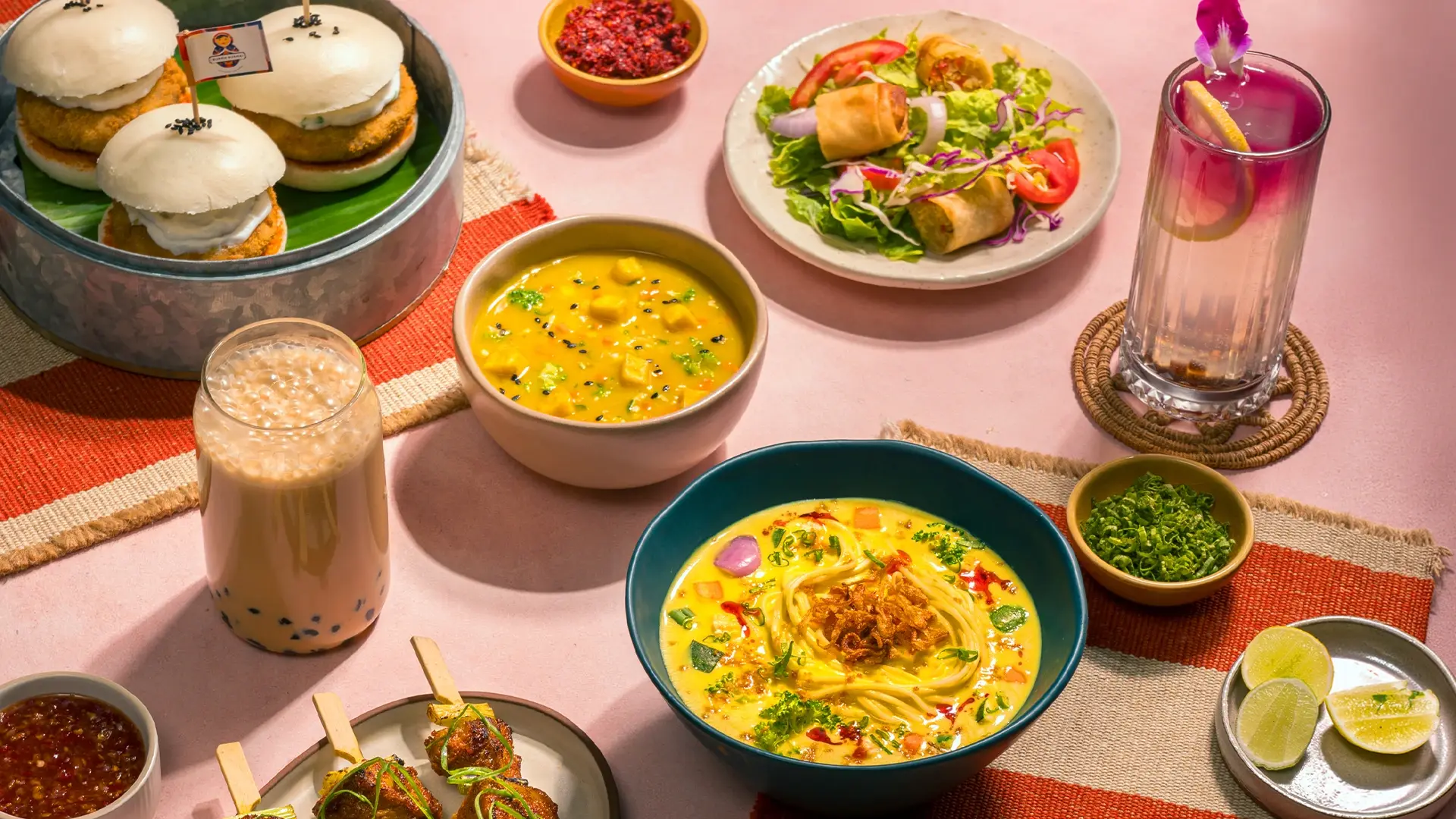
Walk through the streets of Burma and you’ll find burma street food snacks that reflect this constant movement and integration of people, ingredients and ideas. There are crisp fritters and samosas, soft steamed buns, skewers fresh off the grill, spiced potatoes and all kinds of small bites made to be eaten alongside tea or simply picked up as you pass. Some are deeply rooted in local traditions while others carry traces of influences that arrived generations ago.
That is what makes the idea of “foreign” ingredients so interesting. Once an ingredient has spent enough time in a new kitchen, it stops feeling foreign. It has become part of the local vocabulary and Burmese cuisine has been speaking this language for generations.
A Few Burmese Snacks To Start With
At Burma Burma, we love exploring this side of Burmese food, the smaller dishes, the street-side inspiration and the everyday bites that reveal just how much history can sit inside a snack.
PaukSe is one such example. These pillowy, airy steamed buns are soft enough to pull apart with your hands, with fillings ranging from Crunchy Tofu and Broccoli & Asparagus to Brown Onion & Roasted Chilli, Curried Mushrooms, BBQ Jackfruit and Tangy Spring Vegetables. or Steamed Buns
The famous Wa Potato, wok-tossed potatoes inspired by the flavours of the Wa tribe, finished with lemon leaf, crushed peanuts, roasted chillies and brown onion are the perfect snack for times when you want something spicy and addictive. It is familiar at first bite, but the combination takes the humble potato somewhere entirely different.
Burmese Falafel Hummus brings another layer to the story, using yellow lentils, spices, onion and coriander to make golden-fried falafel, served with an aromatic garlic sauce.
For something with a little more char, the Grilled Mock Meat Skewers bring together crushed spices, tamarind and lemon zest, grilled and served with our in-house sweet chilli garlic sauce.
And then there is the Tea Shop Fries Platter, a playful collection of crunchy tea-shop-inspired bites with mock mince samosas, crusted sweet potato fries and spring onion crisps.
Mock Meatballs round out the spread with another bite-sized take on Burmese snacking, the kind of thing that makes sense at the centre of a table, where everyone can reach in and try one more.
The Journey Continues at the Table
Perhaps that is the best thing about food that has travelled. It doesn’t arrive at its destination unchanged. It picks up something along the way, adapts to the ingredients around it, gets cooked in a new kitchen and served at a new table; eventually becoming part of a culture’s own story.
So when a Burmese snack feels familiar to an Indian palate, that’s not a coincidence. It is history and cultural exchange showing up in something as simple as a plate of food. And if you’d like to taste a few of these stories for yourself, try PaukSe, Wa Potato, Mock Meatballs, Burmese Falafel Hummus, Grilled Mock Meat Skewers and the Tea Shop Fries Platter at your nearest Burma Burma. Because sometimes, the easiest way to understand how food travelled across borders is simply to take a bite.
FAQs
What are some popular Burmese snacks?
Popular Burmese snacks range from steamed buns and fritters to spiced potatoes, samosas, skewers and tea-shop bites. They often bring together textures and flavours such as chilli, acidity, lentils, peanuts and fresh herbs.
What makes Burmese snacks interesting for Indians?
Burmese snacks often use ingredients and flavours familiar to Indian diners, including lentils, potatoes, gram flour, chilli, coriander, tamarind and spices. But these ingredients are combined with Burmese techniques and local flavours, creating something that feels both familiar and new.
What are Burmese tea shop snacks?
Burmese tea shop snacks are small savoury bites traditionally enjoyed alongside tea and conversation. They can include fried snacks, fritters, steamed buns, salads and other shareable dishes.
What is PaukSe?
PaukSe is a soft, airy Burmese steamed bun that can be filled with a variety of savoury fillings. At Burma Burma, options include Crunchy Tofu, Broccoli & Asparagus, Curried Mushrooms and BBQ Jackfruit.
Where can I try Burmese snacks in India?
You can try a variety of Burmese snacks at your nearest Burma Burma, including PaukSe, Wa Potato, Mock Meatballs, Burmese Falafel Hummus, Grilled Mock Meat Skewers and the Tea Shop Fries Platter.